

This post contains affiliate links.
If you want to discover the Lisbon that feels like it belongs in another century, head to Alfama.
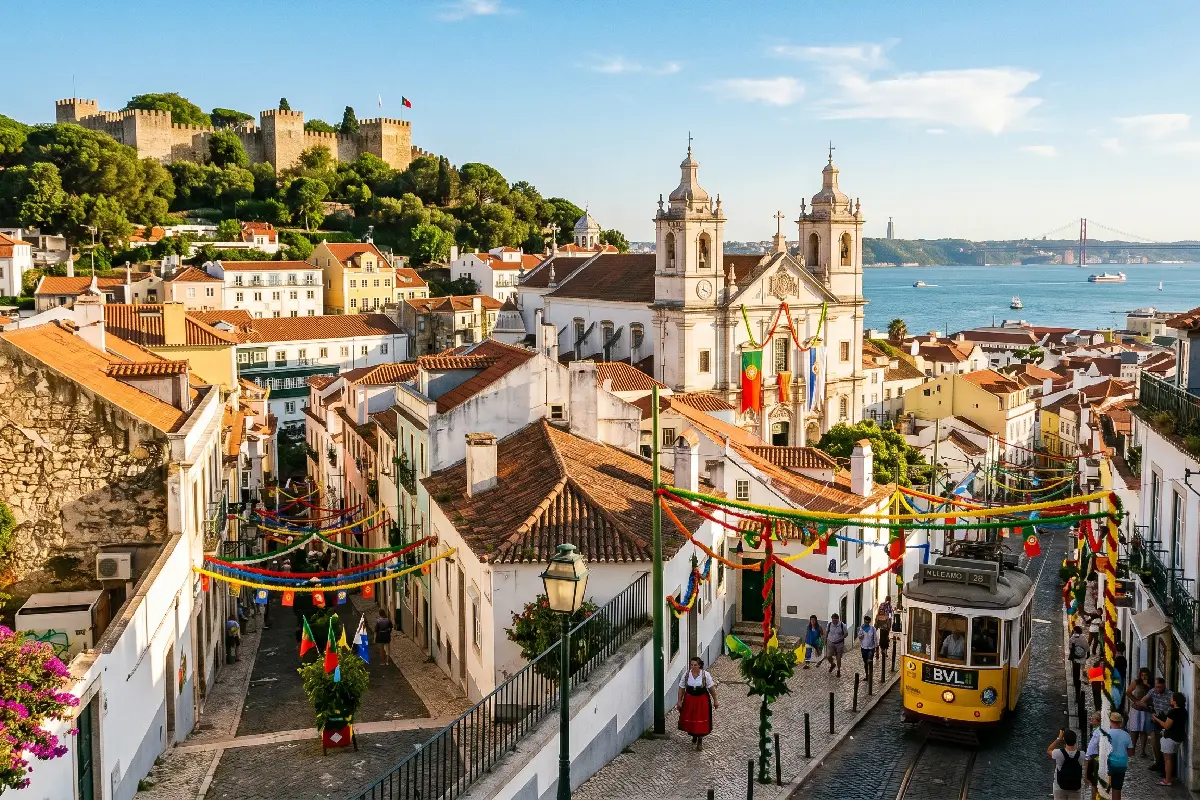
Climbing the hill beneath São Jorge Castle, Alfama is a maze of narrow cobbled streets, tiny squares, colourful balconies and stairways that seem to lead somewhere completely unexpected. Laundry hangs above the streets, flower pots decorate windowsills, and somewhere around the next corner you may hear the unmistakable sound of a Portuguese guitar.
This is one of the oldest and most traditional neighbourhoods in Lisbon, and one of the few places in the city where history isn’t confined to a museum. It is built into the streets themselves.
Alfama is where you come to see ancient churches, discover some of Lisbon’s most beautiful viewpoints, listen to Fado, eat traditional Portuguese food and experience a side of the capital that still feels deeply connected to its past.
And while wandering around Alfama on foot is part of its charm, there is another way to experience it, one that allows you to see much more of the neighbourhood while also understanding the stories behind what you are looking at.
A private or tailored tuk-tuk tour with an official Portuguese guide can be an especially good way to discover Alfama. Rather than simply driving past the sights, your guide can explain the history of the neighbourhood, point out details you might otherwise miss, take you to important landmarks and viewpoints, and then give you plenty of time to get out, walk around and take photographs.
Because Alfama is about much more than simply ticking off a list of attractions. It is about understanding the story behind them.
Location:
The History of Alfama
The history of Alfama goes back many centuries and is closely connected to the history of Lisbon itself.
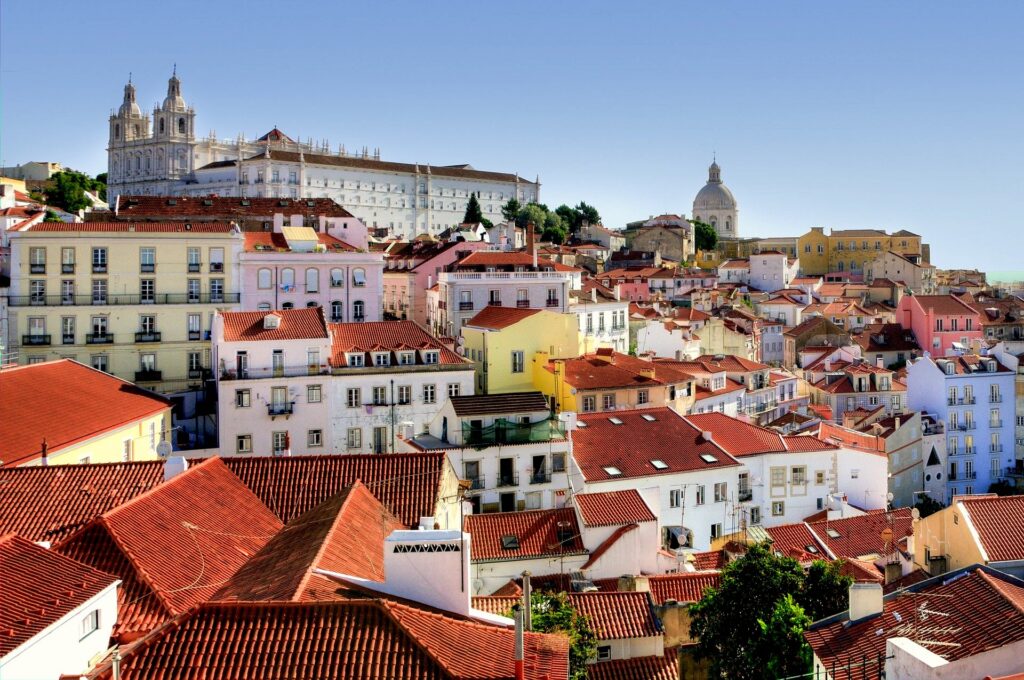
The neighbourhood sits on the eastern slope of one of Lisbon’s hills, between the Tagus River and São Jorge Castle. Its dense network of streets developed over centuries, creating the unusual urban landscape that exists today.
The name Alfama is generally associated with Arabic origins, reflecting the period when Lisbon was under Muslim rule. The neighbourhood’s layout, with its narrow lanes and winding passages, retains elements of the medieval city.
After the Christian conquest of Lisbon in 1147, the city developed and expanded, but Alfama remained a distinctive part of the old city. Its location and dense construction also played a role in its survival through one of the most dramatic events in Lisbon’s history: the devastating earthquake of 1755.
Much of central Lisbon was destroyed by the earthquake and the fires and tsunami that followed. However, Alfama’s position on the hillside and its dense, irregular medieval street plan helped parts of the neighbourhood survive.
That is one of the reasons walking through Alfama today can feel so different from walking through the grander, more orderly streets of Baixa.
Baixa was largely rebuilt according to a planned grid after the earthquake. Alfama wasn’t.
Its streets twist, narrow and climb in ways that can sometimes seem completely illogical, which is precisely what makes them so fascinating.
You might turn down one little alley and suddenly find yourself in a tiny square. A few steps later, you discover a church. Continue climbing and you arrive at a viewpoint overlooking the rooftops and the Tagus.
It is easy to imagine how generations of Lisbon residents have walked these same streets.
Alfama and the Soul of Lisbon
Perhaps the most fascinating thing about Alfama is that it isn’t simply a historic quarter preserved for visitors.
It is still a neighbourhood.
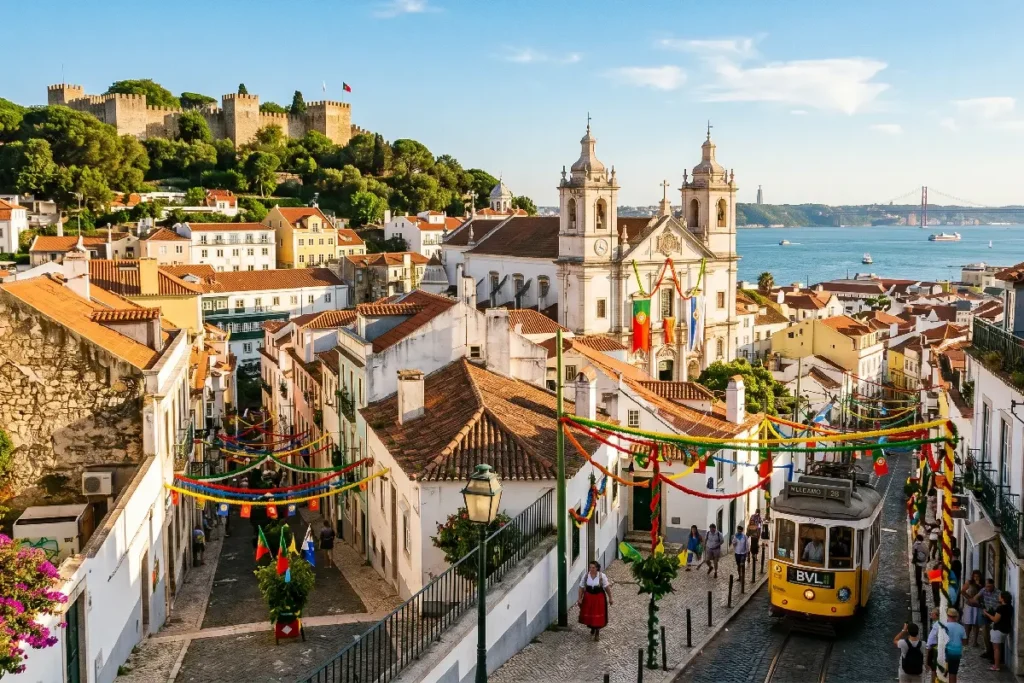
People live here. Children play in the streets. Residents chat from balconies. Small cafés and restaurants occupy tiny spaces along the lanes. Clothes hang from washing lines and elderly residents sit outside their homes.
This mixture of everyday life and centuries old architecture is part of what gives Alfama its character.
It is also one of the neighbourhoods most strongly associated with Fado.
Fado is much more than background music for a Portuguese dinner. It is a musical and poetic tradition deeply connected with Lisbon and was inscribed on UNESCO’s Representative List of the Intangible Cultural Heritage of Humanity in 2011. Fado combines music and poetry, traditionally featuring a singer accompanied by guitar and the Portuguese guitarra.
In Alfama, Fado feels particularly at home.
You may hear it drifting through an open doorway in the evening, see a small Fado house tucked into a narrow street, or come across a restaurant where the atmosphere changes completely once the musicians begin to play.
The Portuguese guitar, with its distinctive shape and sound, is an essential part of traditional Fado. The music can be deeply emotional, often dealing with themes such as love, longing, loss, memory and everyday life.
And that makes it a perfect match for Alfama.
The neighbourhood itself seems to carry a sense of nostalgia.
What to See in Alfama
There is a lot to see in Alfama, and the best discoveries are often the ones you don’t plan.
But there are several landmarks and places you shouldn’t miss.
Lisbon Cathedral, Sé de Lisboa
Start near the Sé de Lisboa, Lisbon’s cathedral and one of the most important religious buildings in the city.
The cathedral has more than 800 years of history and is considered the oldest and most important church in Lisbon. Its construction dates back to the period following the Christian reconquest of the city in 1147.
The building has undergone modifications throughout its history, and inside you can discover architectural and religious details spanning centuries.
The cathedral is also associated with Saint Anthony, one of Portugal’s most famous saints, who was baptised and studied here.
Even if you aren’t particularly interested in religious architecture, the Sé is worth visiting because it provides an important piece of the historical puzzle of Lisbon.
Miradouro de Santa Luzia
From the cathedral, continue upwards towards one of Alfama’s most beautiful viewpoints, the Miradouro de Santa Luzia.
This is one of those places where Lisbon suddenly makes sense.
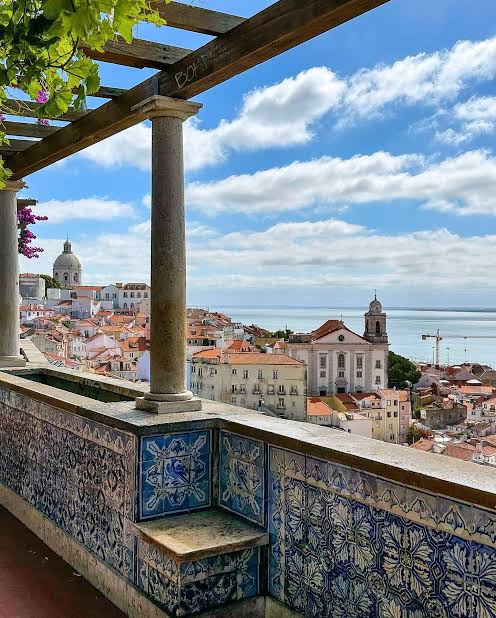
From the viewpoint, you can look across the terracotta rooftops of Alfama towards the Tagus River. The terrace itself is beautiful, decorated with traditional Portuguese azulejos and surrounded by greenery and flowers.
The views are particularly beautiful in the morning light and around sunset.
Look closely and you can see the domes and towers of historic churches rising above the rooftops.
And, of course, this is one of the places where you will want your camera ready.
Portas do Sol
Just a short distance away is another famous viewpoint, Miradouro das Portas do Sol.
The name translates as “Gates of the Sun”, which seems entirely appropriate.
The panoramic view extends across Alfama towards the Tagus, with the neighbourhood’s orange rooftops cascading down the hillside.
There are cafés and terraces here, making it an ideal place to stop for a coffee or a cold drink while taking in the view.
If you’re exploring Alfama on a sunny day, this is one of those places where you will probably want to linger rather than simply take a photograph and leave.
São Miguel Church
The Igreja de São Miguel is another beautiful landmark tucked into the heart of Alfama.
Its location is particularly atmospheric, surrounded by the narrow streets and small squares that give the neighbourhood so much of its character.
The area around the church is also associated with traditional Fado culture.
Look around as you walk and you’ll see some of the details that make Alfama so photogenic: colourful balconies, tiled façades, flower pots and traditional laundry hanging between buildings.
São Vicente de Fora
On the northern edge of Alfama, make time for the impressive Church and Monastery of São Vicente de Fora.
The complex dates back to the period following the Christian reconquest of Lisbon, although the magnificent structure visitors see today was largely developed from the late 16th century onwards.
The church is particularly impressive for its architecture, marble decoration and religious artwork.
It is also located directly beside one of Lisbon’s most famous traditional markets.
Feira da Ladra: Lisbon’s Famous Flea Market
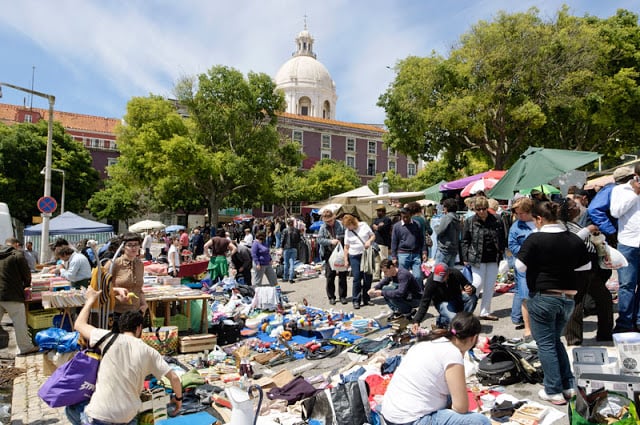
If you happen to be in Alfama on a Tuesday or Saturday, make your way to Campo de Santa Clara for the Feira da Ladra.
This is Lisbon’s famous flea market, where you can browse through antiques, vintage objects, second hand goods, handicrafts and the kind of wonderfully random treasures that make flea markets so much fun.
The market dates back to 1272, making it one of Lisbon’s oldest markets. It has moved around the city over the centuries but eventually settled at Campo de Santa Clara, behind São Vicente de Fora.
Today, Feira da Ladra takes place on Tuesdays and Saturdays.
Don’t arrive expecting a polished tourist market where everything is perfectly arranged.
That’s not the point.
Part of the fun is looking through the unexpected collections of objects and wondering about the stories behind them.
Old books, ceramics, furniture, vintage pieces, records, jewellery and all kinds of curiosities can appear among the stalls.
Even if you don’t buy anything, it is a wonderful place to experience another side of Lisbon’s traditional culture.
And because the market is close to both São Vicente de Fora and the National Pantheon, you can easily combine all three during the same visit.
The National Pantheon
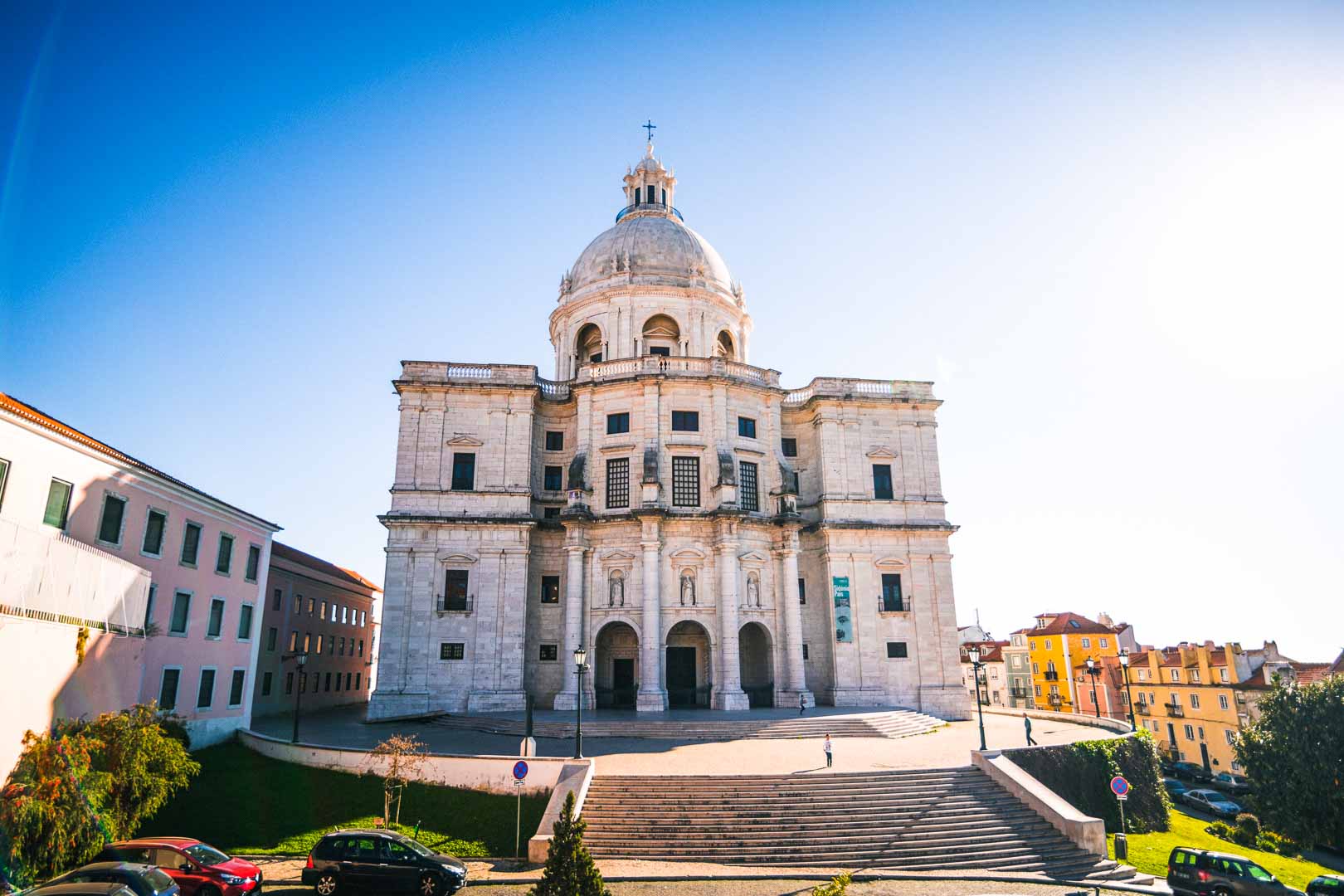
The Panteão Nacional, or National Pantheon, is another impressive landmark in the area.
Its monumental dome is one of the defining features of Lisbon’s skyline, and its location above the streets of Alfama provides another perspective over the city.
The building is officially known as the Church of Santa Engrácia and contains the tombs of important Portuguese figures.
Even from outside, its white monumental architecture contrasts beautifully with the traditional neighbourhood surrounding it.
It is also particularly close to Feira da Ladra, making it an easy addition to your itinerary.
Alfama and Portuguese Culture
Perhaps the greatest reason to visit Alfama is that it gives you a glimpse of Portuguese culture beyond the monuments.
Portugal is often associated with beautiful beaches, historic cities, wine and food, and all of those things are part of the country’s appeal.
But culture is also found in the small details.
The azulejos covering building façades.
The Portuguese pavement beneath your feet.
The sound of a Portuguese guitar.
The tradition of Fado.
The local cafés.
The neighbourhood festivals.
The church bells.
The conversations happening from balconies.
The habit of stopping for a coffee.
The importance of food and family.
The way older traditions continue alongside modern Lisbon.
Alfama brings many of these elements together in one relatively small area.
This is why simply walking through the neighbourhood without knowing anything about its history can sometimes feel like seeing only half the story.
You can photograph a beautiful church, but a guide can tell you why it is there.
You can admire an old building, but a local guide can explain what happened in the neighbourhood around it.
You can hear Fado, but understanding where the music came from gives it a completely different meaning.
Why a Tuk-Tuk Tour Is One of the Best Ways to Discover Alfama

There is a reason tuk-tuks have become such a popular way to explore Lisbon.
Alfama is beautiful, but it is also steep.
Very steep.
Its narrow streets and endless stairways are part of what makes the neighbourhood so charming, but they can also make exploring it on foot tiring, particularly during the warmer months.
A tuk-tuk tour allows you to move through the historic streets without spending the entire day climbing hills.
More importantly, a good tour isn’t simply a sightseeing drive.
The real value comes from having a knowledgeable Portuguese guide with you.
An official Portuguese guide can explain the history of Lisbon and Alfama as you move through the neighbourhood, point out important buildings, tell you the stories behind the streets and landmarks, and help you understand what you’re actually seeing.
Instead of simply saying, “There’s a beautiful church,” your guide can explain its history.
Instead of driving past a viewpoint, they can tell you what you’re looking at.
Instead of seeing a maze of streets, you begin to understand how Lisbon developed.
And that makes the experience much more memorable.
Choose a Tailored Tuk-Tuk Tour
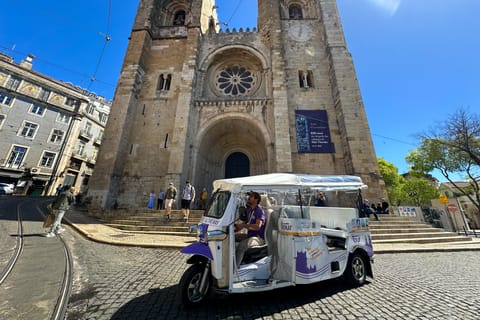
If you have the option, a private or tailored tuk-tuk tour can be particularly worthwhile.
Rather than rushing through a standard itinerary, you can discuss what you want to see before the tour begins.
Perhaps you are particularly interested in history.
Maybe you want to concentrate on Fado and Portuguese culture.
Perhaps you’re a photographer and want plenty of opportunities to stop at viewpoints.
Or maybe you simply want to see the main attractions without spending hours walking uphill.
A tailored tour can accommodate those preferences.
The ideal experience isn’t one where you’re constantly being told, “Five minutes here, now back in the tuk-tuk.”
You want enough time to get out, explore, take photographs and actually experience the neighbourhood.
You can stop at Santa Luzia, walk through the surrounding streets, photograph the azulejos, visit a church, explore a viewpoint and then continue on to the next part of the neighbourhood.
This combination of driving and walking gives you the best of both worlds.
The tuk-tuk gets you through the hills and narrow streets efficiently, while the walking stops allow you to experience the details that make Alfama special.
When choosing a tour, however, look beyond the vehicle itself. The guide can make a huge difference. Look for an experienced, official Portuguese guide who can provide historical context, answer questions and adapt the experience to your interests.
CLICK HERE TO BOOK OUR RECOMMENDED TUKTUK TOUR AND GUIDE →
Watch Our Tuktuk Tour to Alfama:
CLICK HERE TO BOOK OUR RECOMMENDED TUKTUK TOUR AND GUIDE →
How to Spend a Day in Alfama
If you have a full day, there is no need to rush.
Start around the Sé Cathedral and explore the surrounding streets before heading uphill.
Stop at Santa Luzia for photographs, then continue to Portas do Sol.
From there, explore some of the smaller streets around São Miguel and take your time discovering the neighbourhood.
Stop for a traditional Portuguese lunch.
If you’re visiting on a Tuesday or Saturday, head towards Feira da Ladra and browse the stalls at Campo de Santa Clara.
Continue to São Vicente de Fora and the National Pantheon before returning towards the heart of Alfama.
And then, as evening arrives, slow down.
Find somewhere to enjoy a glass of Portuguese wine and dinner.
If you want to experience one of the most characteristic aspects of Lisbon’s culture, book a traditional Fado experience.
When the music begins and the Portuguese guitar fills the room, you may understand why Alfama has such a special place in Lisbon’s cultural identity.

The Alfama Experience
There are plenty of famous attractions in Lisbon.
Belém Tower.
Jerónimos Monastery.
Praça do Comércio.
The Avenida da Liberdade.
São Jorge Castle.
But Alfama is different.
It isn’t simply somewhere you go to see a monument.
It is somewhere you go to wander.
To listen.
To eat.
To look up.
To get slightly lost.
To stop for a photograph.
To watch the light change across the rooftops.
To hear music coming from a tiny restaurant.
To discover a tiled façade you weren’t expecting.
To sit at a viewpoint overlooking the Tagus and watch Lisbon carry on below you.
And perhaps that is the best way to understand Alfama.
It is not just one attraction. It is a collection of centuries of Portuguese history, architecture, music, food and everyday life compressed into a maze of streets on the hillside above the river.
Fado in Alfama
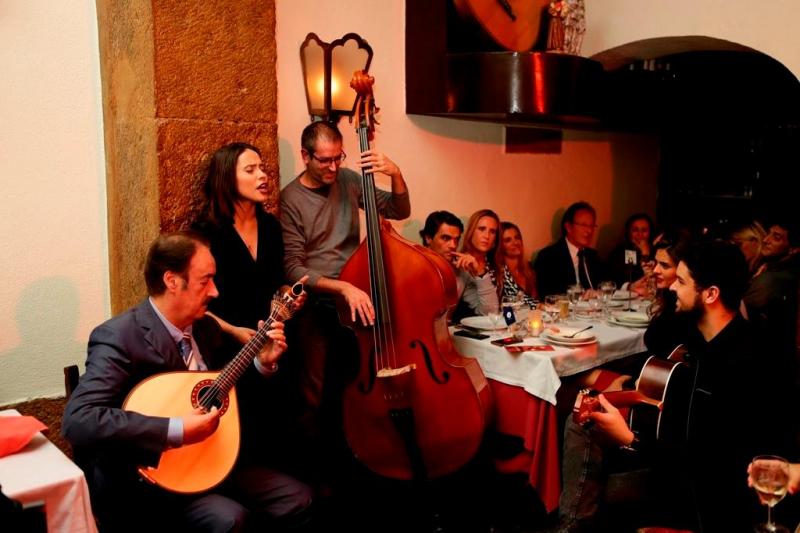
You can’t really talk about Alfama without talking about Fado. The soulful Portuguese music is deeply connected to Lisbon, and Alfama is one of the neighbourhoods most closely associated with its history and traditions. Walking through its narrow cobbled streets in the evening, it isn’t unusual to hear the sound of a Portuguese guitar drifting from a small restaurant or Fado house.
Fado combines poetry, singing and music, often expressing themes of love, longing, nostalgia and the ups and downs of everyday life. The distinctive sound of the Portuguese guitarra gives the music its unmistakable character, while the singer’s emotional performance is what makes a Fado evening such a memorable experience.
Alfama has long been associated with the traditional Fado culture of Lisbon. Its intimate streets, old houses and traditional tavernas provide the perfect setting for an evening of live music. Some of the neighbourhood’s Fado houses are tiny, with musicians performing just a few metres away from diners, creating an atmosphere that feels wonderfully personal.
For visitors to Lisbon, attending a Fado dinner in Alfama is one of the best ways to experience this part of Portuguese culture. Rather than simply listening to Fado as a performance, you can enjoy traditional Portuguese food and wine while the music becomes part of the evening.
There are several Fado houses worth considering in Alfama, including Clube de Fado, Velha Taberna, Fama d’Alfama, Tasca da Bela, Taverna D’El Rey and Sr. Fado. Each has its own atmosphere, so it is worth looking at the style of experience you want before booking.
If you’re visiting Alfama during the day, take some time to explore the streets around São Miguel, Rua dos Remédios and Largo de São Miguel. These areas are closely connected with the neighbourhood’s traditional Fado culture and are particularly atmospheric as the day turns into evening.
For an even deeper understanding of the music, consider visiting the Fado Museum, located in Alfama. The museum explores the history and evolution of Fado and its importance to Lisbon’s cultural identity.
Fado was officially recognised by UNESCO in 2011 as Intangible Cultural Heritage of Humanity, reflecting its importance as a Portuguese cultural tradition.
The best way to experience Fado, however, may simply be to slow down. Have dinner, order a glass of Portuguese wine and let the music take over the room. In a neighbourhood as old and atmospheric as Alfama, it is easy to understand why Fado and Lisbon have become so inseparable.
By the time you leave, you may find that you don’t just remember the songs. You remember the tiny room, the Portuguese guitar, the candlelight, the food and the feeling of sitting in one of Lisbon’s oldest neighbourhoods while listening to a tradition that has been part of the city’s story for generations.
Best Restaurants & Casas de Fado in Alfama
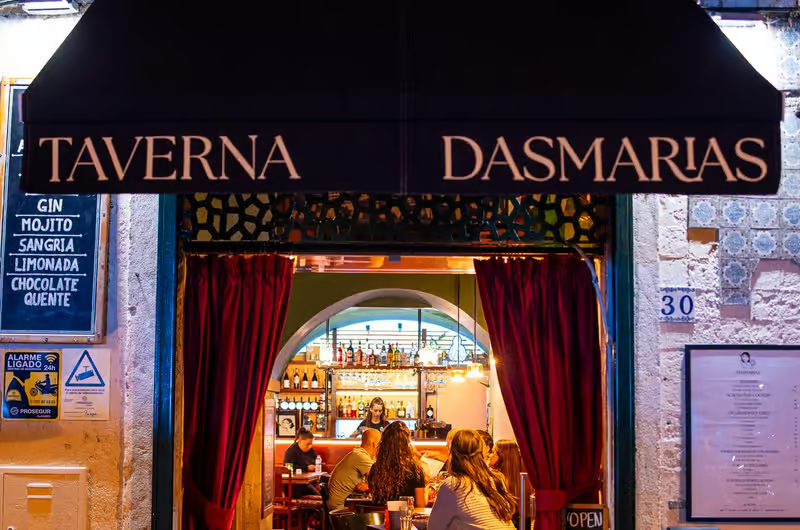
One of the best ways to experience Alfama is through its food. The neighbourhood has everything from traditional Portuguese tascas and atmospheric Fado houses to modern restaurants, brunch spots and more sophisticated dining experiences.
Because Alfama is one of Lisbon’s most popular areas, there are plenty of restaurants to choose from. Whether you want to experience a traditional Fado dinner, enjoy Portuguese petiscos, stop for a coffee and pastel de nata or sit down for a more refined meal, there is something for every type of traveller.
Here are some restaurants in and around Alfama worth adding to your list.
Clube de Fado
If you want to combine dinner with one of Lisbon’s most famous cultural traditions, Clube de Fado is an obvious choice.
This atmospheric restaurant combines Portuguese cuisine with live Fado performances, creating the kind of evening that feels quintessentially Lisbon. The setting is traditional and intimate, making dinner feel like an experience rather than simply a meal.
Expect classic Portuguese dishes, Portuguese wine and, of course, live Fado.
For visitors experiencing Lisbon for the first time, it is a wonderful way to combine two of the city’s great pleasures: Portuguese food and Fado.
Taverna das Marias
Taverna das Marias is a good option if you’re looking for Portuguese petiscos in a lively and relaxed setting.
The restaurant takes inspiration from Maria Severa, one of the legendary figures associated with the history of Lisbon’s Fado tradition. Its menu focuses on Portuguese-style petiscos, making it a good choice if you want to order several dishes and share them.
This is the kind of place that works particularly well with friends or family, especially if you want to sample different flavours rather than order one large main course.
Alfama Rio
Alfama Rio is a more casual option and works well for a relaxed break while exploring the neighbourhood.
It is particularly suited to stopping for a coffee, drink or something casual to eat before continuing your exploration of Alfama.
Its atmosphere makes it a nice place to slow down for a while rather than treating your day as a race between sightseeing spots.
Casa São Miguel
For something sweet, make a stop at Casa São Miguel.
This traditional pastry shop specialises in Portuguese regional sweets and pastéis de nata, making it an excellent place for a coffee and pastry break while exploring Alfama.
Sometimes you don’t need a full restaurant experience. Sitting down with a warm pastel de nata and an espresso while surrounded by the narrow streets of one of Lisbon’s oldest neighbourhoods can be one of the simplest pleasures of exploring the city.

Breakfast Lovers
If you’re exploring Lisbon early in the day and want something different from a traditional Portuguese breakfast, Breakfast Lovers is worth considering.
The restaurant is known for its breakfast and brunch-style dishes, making it a good option for travellers who prefer a more substantial breakfast before spending the day sightseeing.
It is also a reminder that Alfama’s food scene isn’t exclusively about traditional Portuguese restaurants. You can find a variety of international and contemporary options throughout the surrounding historic centre.
Velha Taberna, Casa de Fados
Velha Taberna is an atmospheric choice if you want to combine Portuguese food with live music.
Located in one of Alfama’s characteristic historic streets, it has the intimate atmosphere you would expect from a traditional Fado house.
This is the kind of place to consider for an evening when you want dinner to become part of the cultural experience.
Traditional Portuguese food, wine, a small intimate setting and live Fado make for a very Lisbon evening.
Gosta do Castelo
Gosta do Castelo is a versatile option that works for everything from breakfast and brunch to lunch and dinner.
Its location near São Jorge Castle makes it convenient to combine with a day of exploring the historic neighbourhoods around the castle and Alfama.
If you are looking for somewhere that isn’t exclusively focused on traditional Portuguese cuisine, it offers a more contemporary and relaxed alternative.
Solar de Alfama
Solar de Alfama is another restaurant worth considering if you’re looking for a traditional Alfama dining experience.
The restaurant fits naturally into the atmosphere of the old neighbourhood and is a good option for visitors who want to enjoy Portuguese cuisine while surrounded by the character of historic Lisbon.
For a traditional evening in Alfama, this is the type of restaurant that can easily be combined with a walk through the neighbourhood and a Fado experience.
Fama d’Alfama Restaurante, Casa de Fados
If your priority is Fado, Fama d’Alfama is another name to add to your list.
The combination of Portuguese food and live Fado is one of the quintessential Alfama experiences.
The neighbourhood is one of the historic homes of Fado, so having dinner while listening to Portuguese singers and musicians can be a particularly memorable way to experience the area.
For first-time visitors to Lisbon, this type of evening is a wonderful way to combine food, music and Portuguese culture.
Chapitô à Mesa
Chapitô à Mesa offers something a little different.
Located within the Chapitô cultural complex near São Jorge Castle, the restaurant is known for its distinctive setting and beautiful views across Lisbon.
The menu takes a more contemporary approach to Portuguese cuisine, making this a good alternative if you’ve already enjoyed several traditional Portuguese meals during your trip.
It is particularly appealing for a leisurely lunch or dinner when you want to take a break from sightseeing and enjoy the setting as much as the food.
Tasca da Bela, Casa de Fados
For another evening combining Portuguese food and Fado, Tasca da Bela is worth considering.
The restaurant is closely connected with Alfama’s Fado culture, and dinner here is about the complete experience rather than simply the food on your plate.
If you’re visiting Lisbon for the first time and want to understand why Alfama and Fado are so closely connected, a traditional Fado dinner can be one of the most atmospheric experiences you have during your stay.
Grenache
If you’re looking for something more sophisticated, Grenache offers a completely different dining experience.
Located close to São Jorge Castle, this fine dining restaurant takes a more contemporary approach to its cuisine, with seasonal ingredients and French influences.
This is one for a special evening rather than a quick lunch between sightseeing stops.
If you want to dress up, enjoy a longer dinner and experience a more refined side of Lisbon’s food scene, Grenache is a restaurant worth considering.
Taberna Sal Grosso
For something much more casual, Taberna Sal Grosso is the kind of small Portuguese restaurant that appeals to people looking for traditional food in an intimate setting.
The atmosphere is closer to that of a traditional Lisbon tasca, making it a good choice for a relaxed meal rather than a formal dining experience.
It is particularly appealing if you want to concentrate on the food and try Portuguese dishes without the added performance of a Fado house.
Taverna D’El Rey
Another Fado-focused option is Taverna D’El Rey.
The combination of Portuguese food, wine and live music creates the type of evening that many visitors imagine when they picture traditional Alfama.
There is something particularly atmospheric about listening to Fado in the old neighbourhood after dark, when the narrow streets become quieter and the music coming from the restaurants becomes part of the soundscape of Alfama.
Velha Gaiteira
Velha Gaiteira is another Portuguese restaurant worth knowing about if you’re looking for a more traditional meal in Lisbon’s historic centre.
It is a good option for dinner and can easily be combined with an evening stroll through Alfama.
Exploring the neighbourhood after dark is a completely different experience from visiting during the day. The warm lights, quiet cobbled streets and sounds coming from restaurants and Fado houses create a very different atmosphere.
Antù Alfama
For a more contemporary Portuguese dining experience, Antù Alfama is another option to consider.
Tucked into one of Alfama’s atmospheric streets, it offers a modern interpretation of Portuguese cuisine while remaining connected to the culinary traditions of the country.
It is a good choice if you want to experience Portuguese food but prefer a restaurant with a more contemporary feel.
Sr. Fado
If the main reason you’re looking for a restaurant in Alfama is Fado, Sr. Fado is another name worth knowing.
This intimate restaurant combines dinner with live Fado, creating a more personal experience than some of the larger Fado venues.
For visitors who want to experience traditional Portuguese music in a smaller and more intimate environment, it can be an interesting choice.
More Restaurants to Discover in Alfama
There are plenty of other restaurants worth discovering around Alfama, including Barracão de Alfama, O BECO and Near Me Alfama Tapas.
Barracão de Alfama is a traditional-style option for those looking for Portuguese food in the heart of the neighbourhood.
O BECO is particularly interesting for anyone who loves bacalhau, Portugal’s famous salted cod, while Near Me Alfama Tapas offers a more casual approach with dishes designed for sharing.
For another classic Fado evening, Dona Amália, Casa de Fado is also worth considering.
The great thing about Alfama is that you don’t have to stick to one particular type of dining. You can have a quick coffee and pastel de nata in the morning, enjoy a traditional Portuguese lunch, stop for petiscos in the afternoon and then finish the day with a Fado dinner.
What Should You Eat in Alfama?
Whichever restaurant you choose, this is a neighbourhood where you should embrace Portuguese food.
Look for dishes such as bacalhau, grilled sardines, octopus, polvo à lagareiro, arroz de marisco, grilled fish, alheira, caldo verde and traditional Portuguese meat dishes.
Don’t overlook petiscos either. Ordering several small dishes to share can be a great way to try more of the menu without committing to one large main course.
Portuguese cheese, cured meats, olives and freshly baked bread are also excellent choices for sharing.
And always leave room for dessert.
A pastel de nata with an espresso is practically compulsory, while other Portuguese sweets such as arroz doce and bolo de bolacha are also worth trying.
If you’re having dinner at a Fado house, pair your meal with Portuguese wine and allow yourself to settle in.
Fado dinners are not really about eating quickly and leaving. They are about creating an evening around food, music and Portuguese culture.
Ultimately, the right restaurant depends on the kind of experience you’re looking for.
You can have a casual lunch in a traditional tasca, stop for a pastel de nata and coffee, enjoy a sophisticated dinner with views, or spend an entire evening eating Portuguese food while listening to Fado.
That variety is part of what makes eating in Alfama so enjoyable.
The food is another way of discovering the neighbourhood, and sometimes the best meals are the ones you find after wandering down one of those tiny streets without quite knowing where you’re going.
Where To Stay in Alfama
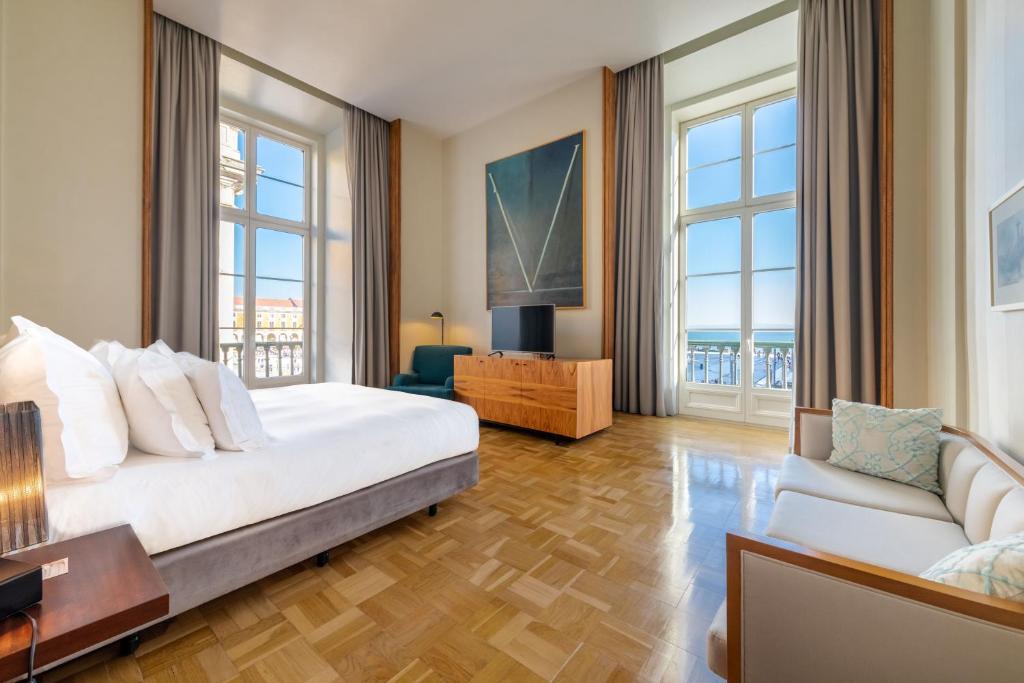
Staying in Alfama gives you the chance to experience one of Lisbon’s most atmospheric neighbourhoods from morning until night. Instead of simply visiting for a few hours, you can wake up surrounded by centuries-old buildings, step outside into narrow cobbled streets and spend your evenings listening to Fado drifting from traditional restaurants.
Accommodation in Alfama ranges from charming boutique hotels and historic guesthouses to stylish apartments and luxury properties, many with beautiful views across the terracotta rooftops and the Tagus River. Some are tucked away in quiet streets, while others are close to the neighbourhood’s most famous viewpoints, restaurants, churches and historic attractions.
The best place to stay will depend on the kind of Lisbon experience you want. If you love history, atmosphere and being surrounded by traditional Portuguese architecture, staying in the heart of Alfama can be a wonderful choice. If views are your priority, look for accommodation higher up the hill, while those who want easy access to restaurants and Fado houses may prefer to stay closer to the lower part of the neighbourhood.
Here are some of the best places to stay in and around Alfama, from boutique hotels and historic properties to apartments with spectacular Lisbon views:
Vincci Alfama – A stylish boutique hotel in the heart of Alfama, offering a comfortable base for exploring the neighbourhood’s historic streets, viewpoints, restaurants and Fado houses. Book Here →
Pousada Alfama – A charming historic stay in the heart of Alfama, combining traditional Portuguese character with a comfortable and elegant atmosphere. Book Here →
The Editory Riverside Hotel, an Historic Hotel – A stylish historic hotel overlooking the Tagus, combining its beautiful riverside setting with elegant interiors and a convenient location for exploring Alfama and Lisbon’s historic centre. Book Here →
Áurea Museum by Eurostars Hotel Company – A sophisticated five-star hotel in a beautifully restored historic building, combining elegant contemporary interiors with original architectural details and a prime location in Alfama. Book Here →
Eurostars Das Letras – A modern five-star hotel offering stylish rooms, contemporary comfort and a central location that makes it easy to explore Lisbon’s historic neighbourhoods, including Alfama. Book Here →
Pousada de Lisboa – Small Luxury Hotels Of The World – An elegant luxury hotel set in the historic Praça do Comércio, combining grand architecture, refined interiors and a prime riverside location within easy reach of Alfama. Book Here →
Put Alfama in Your Lisbon Itinerary
Alfama is one of the places that makes Lisbon so distinctive.
Its history stretches back centuries, its churches and monuments tell the story of the city, its viewpoints reveal spectacular views across the Tagus, and its narrow streets preserve an atmosphere that feels completely different from the grand avenues of modern Lisbon.
It is also one of the best places to experience Fado, discover traditional Portuguese food and see everyday Lisbon life unfolding around you.
And while you can certainly explore Alfama independently, a tailored tuk-tuk tour with an official Portuguese guide can transform the experience.
You can cover much more ground, avoid exhausting yourself on the steepest streets, learn the stories behind the landmarks and have a local expert explain the history and culture as you go.
Most importantly, a private tour can be tailored around you.
You can stop for photographs.
You can get out and walk.
You can spend longer at the viewpoints you love.
You can explore the streets instead of simply driving through them.
And you can ask questions.
Because Alfama isn’t a neighbourhood you should rush through.
Take the tuk-tuk to discover the bigger picture, then get out and explore the little details on foot.
That’s when Alfama really comes alive.
And somewhere between the ancient cobblestones, colourful tiles, church bells, Portuguese food, spectacular views and the distant sound of a guitarra portuguesa, you’ll begin to understand something that no guidebook can quite capture:
Alfama isn’t just where Lisbon’s history is preserved. It is where Lisbon’s history is still being lived.